
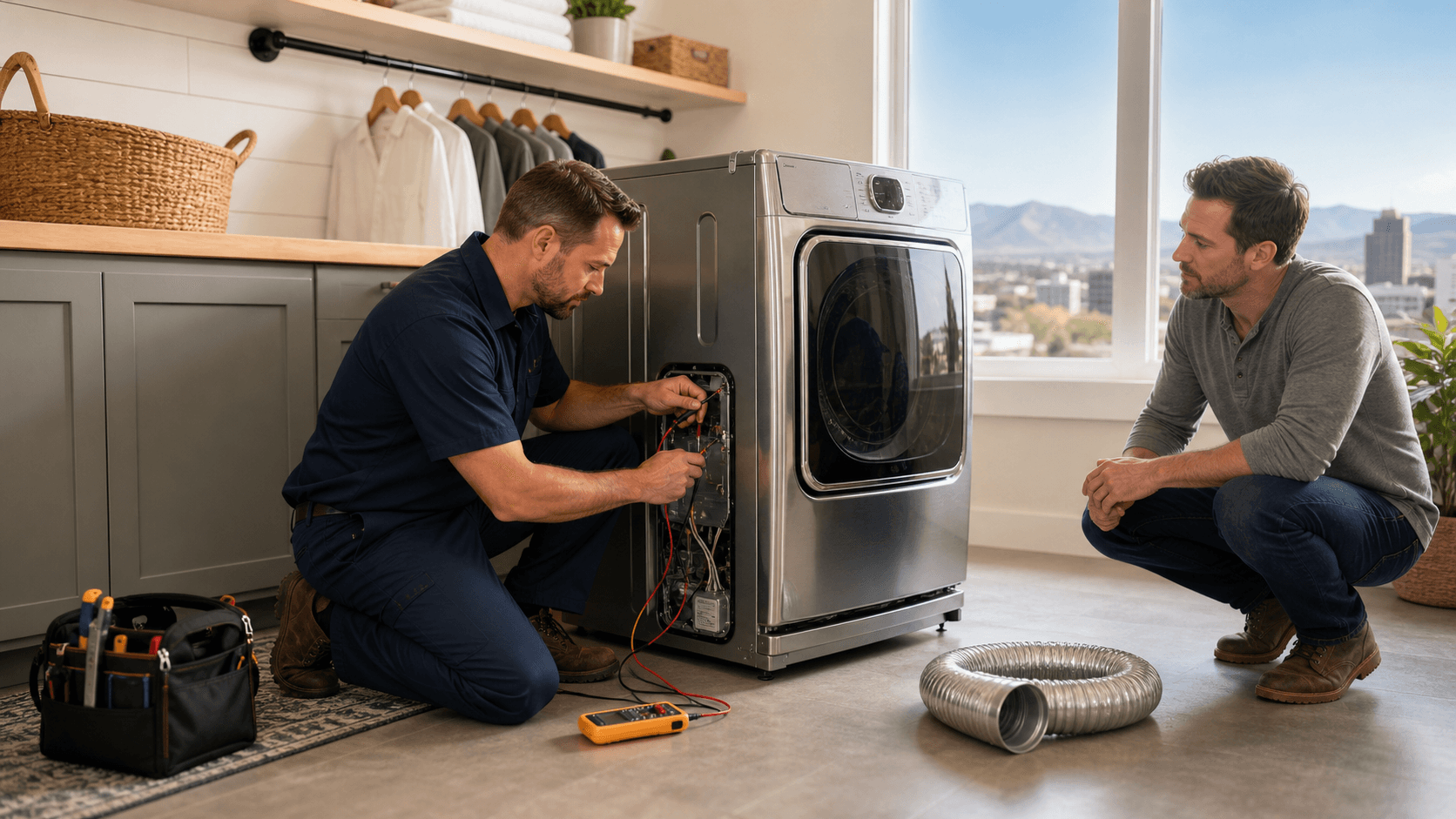
Stop Wasting Time on Inefficient Drying Cycles
When a basic load of laundry turns into an all-day chore, something is off with your dryer. Clothes that stay damp, cycles you have to run twice, or towels that still feel cold after a "complete" cycle are more than just annoying; they are clear signs your dryer needs attention. Ignoring those hints can shorten the life of your clothes, drive up your energy bills, and create safety risks in your home.
Recognizing early warning signs protects both your family and your budget. A dryer that has to work harder than it should is under stress, and stressed appliances fail sooner. At Denver's Best Appliance Repair, we see this every day in homes across the Denver metro area. We are a locally owned appliance repair company, and our team provides same-day dryer repair in Denver for homeowners who want fast, reliable help before a small issue becomes a big problem.
When Longer Dry Times Signal a Hidden Problem
One of the first things people notice is that dry times creep up slowly. A load that used to finish in 40 or 50 minutes might suddenly need 70 minutes or more, even though you are washing the same types of clothes. If you find yourself constantly restarting the dryer "for just a bit longer," that is usually a sign something inside the system is not working correctly.
Several issues can cause this slowdown. Common culprits include clogged dryer vents that restrict airflow, failing heating elements that cannot reach or hold the proper temperature, worn thermostats that misread heat levels, or moisture sensors that no longer detect when clothes are actually dry. Guessing which part is to blame and swapping pieces at random can waste money, and in some cases, can make the problem worse if a deeper issue goes untouched.
Longer dry times are not just inconvenient. They affect your home in a few key ways:
- Higher utility bills from repeated or extra-long cycles
- Extra wear and tear on fabrics as they tumble for longer
- Added strain on the dryer motor and internal components
- Increased risk of overheating if airflow is restricted
In many Denver homes, especially those with long vent runs or older ductwork, lint buildup inside the vent line is a major factor. When air cannot escape properly, the dryer has to work overtime, which is why a professional inspection and repair can save both time and money in the long run.
Unusual Noises and Vibrations You Should Not Ignore
Dryers are never completely silent, but you know what is normal in your own laundry room. If new sounds appear and stick around, that is your cue to pay attention. Grinding, squealing, thumping, or rattling noises that continue even after you rebalance the load or reposition the dryer usually point to mechanical wear.
Those sounds often come from parts that keep the drum turning smoothly. Worn drum rollers can cause a loud rumble or thump, broken or stretched belts can make slapping or squealing noises, and failing motor bearings can create a harsh grinding sound. Loose screws, brackets, or internal panels can rattle and shake until they break free, which can lead to costly damage if they hit moving parts.
Unusual vibration is another red flag. If your dryer starts walking across the floor or shaking the walls, even when loads are small, something is off inside. Dryers squeezed into tight Denver laundry closets or stacked in small spaces are especially vulnerable, because excess movement can damage nearby walls, floors, or gas and vent connections. Having a professional diagnose the cause early helps prevent those minor noises from turning into major repairs or safety issues.
Heat Issues, Burning Smells, and Safety Red Flags
Heat is the heart of your dryer, so any change in temperature is worth taking seriously. When clothes come out cold or still damp, you may be dealing with a failed heating element, faulty thermostat, or a blown thermal fuse that shut the heat off to protect the unit. On the other hand, if the dryer exterior feels extremely hot to the touch, something is likely blocking airflow or confusing the temperature controls.
Certain signs move the situation from "annoying" to "urgent." Burning or scorched smells, visible lint building up around the door or vent area, or a dryer that shuts off mid-cycle from what feels like overheating are all major warnings. Lint is highly flammable, and when it collects in vents, filters, and internal ducts, it can ignite if temperatures get too high.
These issues can also strain electrical systems, especially in older Denver homes where circuits are already loaded with modern appliances. When a dryer pulls too much current or overheats, it may trip breakers or cause flickering lights. In these situations, a professional should inspect not just the dryer, but also the venting, thermostats, safety sensors, and wiring to make sure the appliance can run safely again.
Electrical Glitches, Error Codes, and Random Shutoffs
Modern dryers do a lot more than spin and heat. They rely on control boards, sensors, and digital interfaces to run complex cycles. When something electronic goes wrong, it often shows up as a dryer that simply will not start, buttons that do not respond, or a drum that spins but never heats up. Random shutoffs before the end of a cycle are another sign that something inside is not communicating correctly.
Many newer dryers display error codes or flashing lights when they detect trouble. These codes may hint at problems with moisture sensors, temperature sensors, the control board, or safety switches like the door latch. While you can often find a basic explanation for a code in the user manual, actually testing the parts behind that code requires the right tools and knowledge.
Professional technicians work with these systems every day. We are able to:
- Interpret error codes the right way
- Test sensors, switches, and wiring for proper function
- Identify failing control boards or loose connections
- Verify that both heat and airflow match the settings you choose
Trying to reset the unit repeatedly without finding the cause can hide a serious issue that only shows itself again when you least expect it, like in the middle of a busy laundry day.
When to Call a Local Pro for Dryer Repair in Denver
Every homeowner does a bit of troubleshooting at home, like checking the lint filter, confirming the dryer is plugged in, or making sure the circuit breaker has not tripped. Those are smart first steps. The line you do not want to cross is ignoring persistent warning signs or trying DIY fixes on critical components like gas lines, internal wiring, or control boards.
If you notice repeated problems, especially any burning smells, unusual heat, frequent tripped breakers, or sounds that grow louder over time, it is time to bring in a professional. Dryers are powerful appliances that combine electricity, heat, and moving parts in a compact space, and that combination deserves respect. For homeowners across the Denver metro area, having a trusted local company ready with same-day help can make a big difference when the laundry starts to pile up.
When a technician is already in your home, it can also be a good opportunity to ask about a thorough vent inspection or cleaning and a quick check of other key appliances like your washer, refrigerator, or dishwasher. Catching small problems early, across your laundry and kitchen, helps keep your home running smoothly and gives you one less set of chores to worry about each week.
Restore Reliable Laundry Days With Expert Local Help
If your dryer is acting up, we are ready to get it back to working safely and efficiently. Schedule professional dryer repair in Denver with Denver's Best Appliance Repair and avoid the hassle of repeated breakdowns. Our technicians will diagnose the issue quickly, explain your options, and complete the repair with quality parts. To book a service visit or ask a question, simply contact us.